If you’ve ever looked into commercial air conditioning systems for a factory, warehouse or large retail space, then you’ve probably come across the terms VRF and VRV. They sound like industry jargon (to be fair, they usually are) but they refer to one of the most efficient and flexible types of modern cooling systems available today.
Choosing the right setup isn’t always about staff comfort and performance.
In busy industrial or warehouse environments, consistent temperature can also affect product quality, machinery reliability as well as operating costs. That’s why understanding what VRF and VRV systems actually deliver is important.
In our guide, we’ll consider:
- What VRF and VRV actually means (and the difference between them)
- How the technology works in plain English
- The benefits for warehouses, factories and commercial sites
- What to consider before installing one
Let’s clear the confusion and look at whether a VRF or VRV system could be the smart move for your business.
What the 2 acronyms mean:
VRF = Variable Refrigerant Flow
VRV = Variable Refrigerant Volume
They each describe the same technology. The difference came about because one manufacturer, Daikin, trademarked “VRV”, while other air con unit manufacturers, like Mitsubishi, stuck with the term “VRF”.
So, each air conditioning system is built on the same principle – to precisely control the flow of refrigerant to multiple indoor units from a single outdoor unit.
How it Works
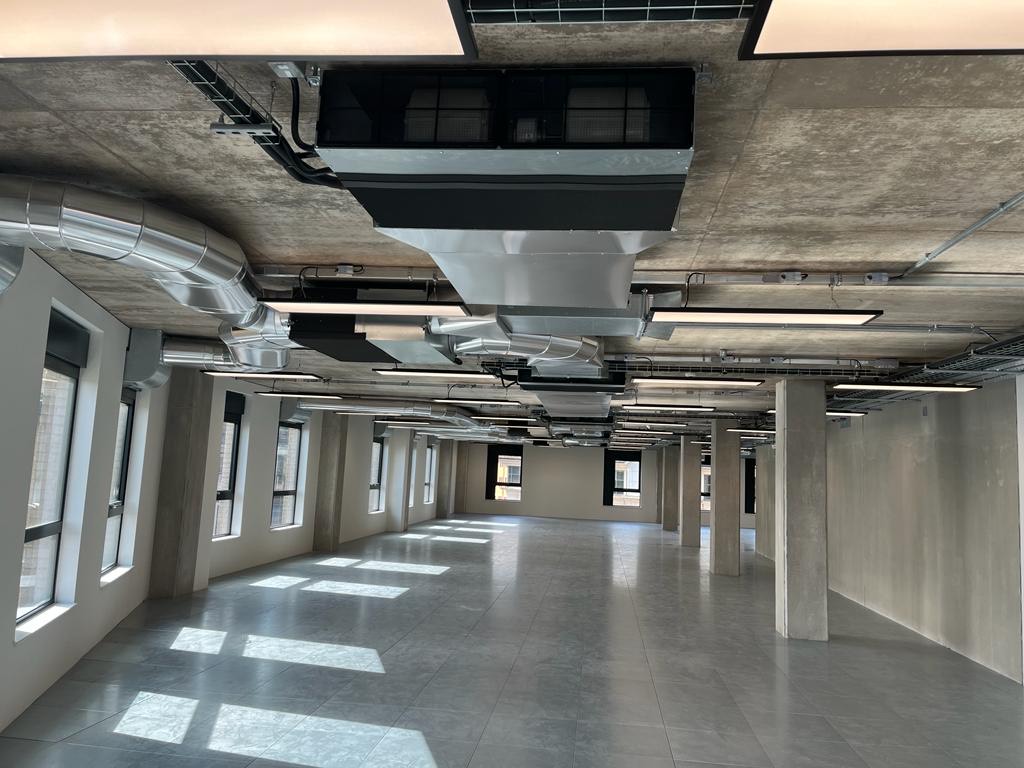
A VRF/VRV system uses one or more outdoor units to supply multiple indoor units across a large interior space – making them perfect for warehouses or factories.
Sensors monitor the cooling or heating demand in each area and automatically adjust how much refrigerant is delivered.
That means:
- Zoned temperature control so each area gets exactly what it needs
- Energy efficiency ensuring the system never runs harder than needed cutting operating costs
- Stable comfort so no constant and harsh on/off cycling like older air conditioning systems
- Optional heat recovery – some variants can heat one zone while cooling another, recycling energy between areas
It’s a clever bit of engineering that’s quietly replaced many traditional “big chiller” systems in commercial and industrial buildings.
Why it Matters for Big Spaces
If you manage a warehouse or factory then a VRF/VRV setup offers several major advantages:
Zonal control – Offices, production areas and storage zones all have different requirements; these types of systems let you fine-tune temperatures by individual zone.
Energy efficiency – By adjusting refrigerant flow continuously, they reduce energy waste and lower running costs.
Scalability & flexibility – You can add new areas or expand operations without having to replace the entire system.
Quiet performance – perhaps not a huge deal in a noisy factory but if you’re in an office its where high levels of noise do matter.
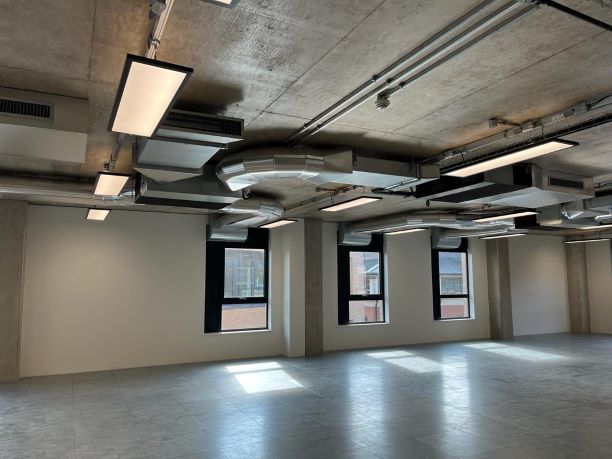
Compact design – Less bulky ductwork and much easier retrofitting into older buildings.
Key Considerations
Initial costs: Expect a higher upfront investment than a basic split system, but better long-term savings.
Design & installation quality: VRF/VRV must be properly specified and commissioned for full efficiency. We’d recommend turning to highly experienced air conditioning engineers for this requirement.
Maintenance: Regular servicing ensures performance, refrigerant balance and longevity of the VRF/VRV system.
Refrigerant type & compliance: UK F-Gas regulations restrict older refrigerants; check for R32 or similar low-impact gases.
Building layout & heat loads: High ceilings, machinery or solar gain (amount of sunlight) all affect performance so correct zoning is absolutely crucial for the success of your system.
For factories or heavy industry, filtration and ventilation become equally important – a VRF system can handle temperature control, but you’ll still need proper extraction for dust, exhausts and process fumes.
In short, VRF/VRV is the sweet spot for many modern commercial and industrial sites offering advanced control without the complexity of full central plant systems.
How to Specify Your System Correctly
Calculate heat load properly – you’ll certainly need to account for people, machinery and sunlight.
Design sensible zones – offices, production and storage may need different indoor unit types.
Plan refrigerant routes – keep within manufacturer length limits but take into account further expansion.
Think about heat recovery – ideal for buildings with simultaneous heating and cooling needs.
Integrate ventilation – use dust and fume extraction where required, especially in factories.
Work with F-Gas certified engineers – compliance isn’t an option!
Conclusion
VRF and VRV air-conditioning systems have become the go-to choice for large commercial spaces – from warehouses and factories and even to retail sites.
They deliver precise temperature control, lower energy costs as well as full scalability that grows with your business.
If you’re exploring air-conditioning options across Somerset, Bristol or Weston-super-Mare, then please speak to a certified installer who understands industrial cooling and can tailor a VRF/VRV solution to your exact site and processes.
Call us on 01934 309 879 or contact us today for more information.